
A metal always born alloyed
Man has been melting gold for more than six thousand years: the ornaments of the Varna necropolis, on the Black Sea, bear witness to it. But melting is not purifying. Native gold, the gold of rivers and veins, is never pure: silver always accompanies it, copper often does. The rivers of Anatolia rolled down a natural alloy of gold and silver that the Ancients called electrum, so ambiguous that it was sometimes taken for a metal in its own right.
Purity, then, is not a state of nature. It is a technology, one of the oldest in the world, and its history has places, dates and names. To refine is to separate gold from everything that is not gold. Three thousand five hundred years of trial, error and discovery come down to three gestures, always the same: heat, dissolve, begin again more finely.
Babylon: the furnace as final arbiter
In the fourteenth century BC, gold was already circulating among the courts of the Near East as an instrument of diplomacy. The Amarna archives, in Egypt, preserve the correspondence of the kings of Babylon with the pharaoh. On Tablet EA 10, Burna-Buriash II complains of Akhenaten in terms that any smelter would still understand:
“The twenty minas of gold that were brought here were not all there. When they put them into the kiln, not five minas of gold appeared.” Tablet EA 10, Amarna letters, translation after William L. Moran.
Twenty minas is some ten kilograms. Passed through the furnace, the royal gift returned less than a quarter of that. Everything is already there: the gap between the declared weight and the fine metal, the furnace that settles the matter, and one of the very first complaints over fineness in recorded history. Between powers as between private individuals, trust has never been declared: it has always been measured by fire.
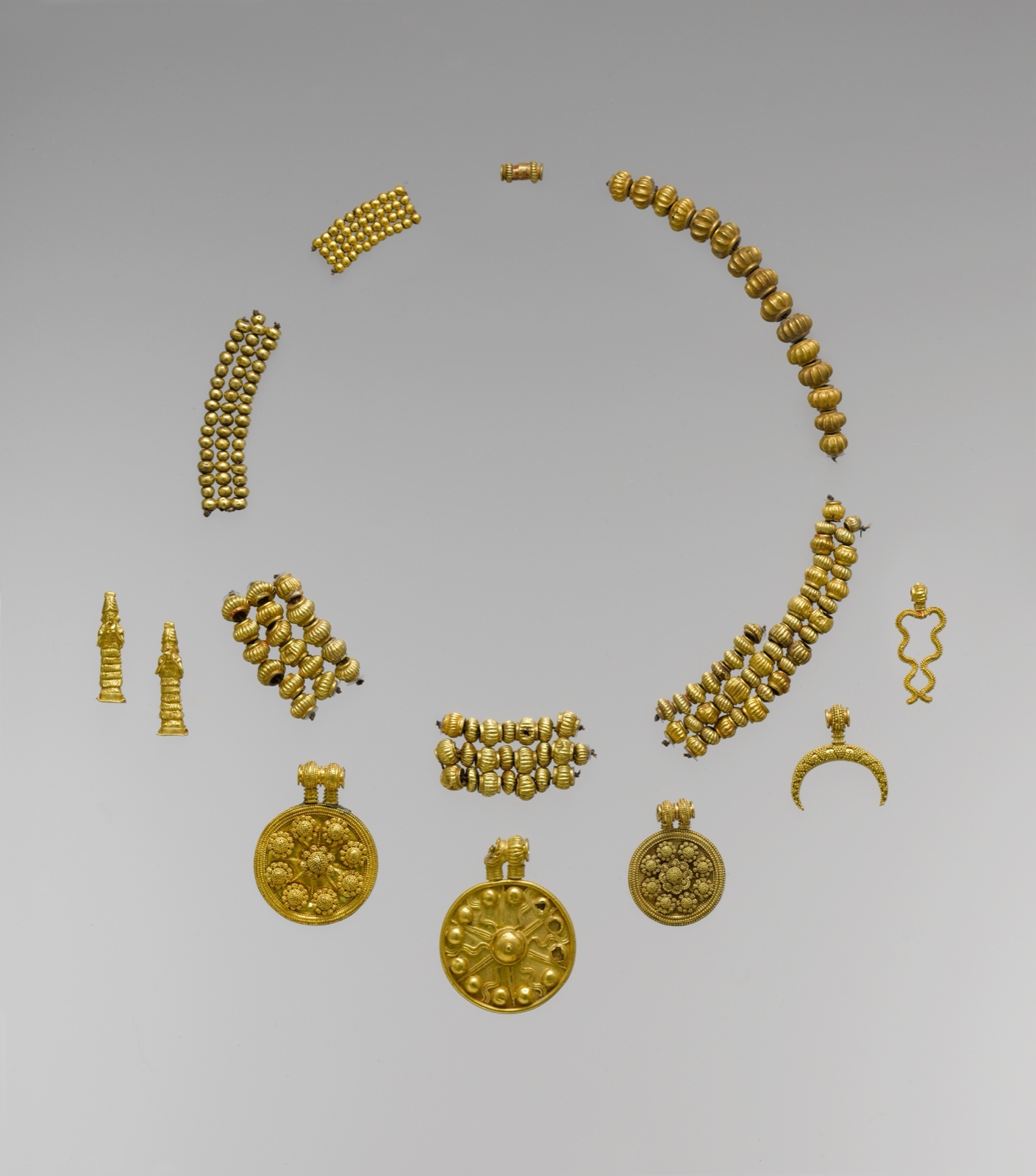
Yet the furnaces of the Bronze Age already knew a great deal: cupellation, practised for centuries, carried the lead and the base metals away into a porous ash and returned a clean precious metal. But it had a structural limit: the silver remained. Men knew how to judge gold; they did not yet know how to finish it.
Sardis: the world's first refinery
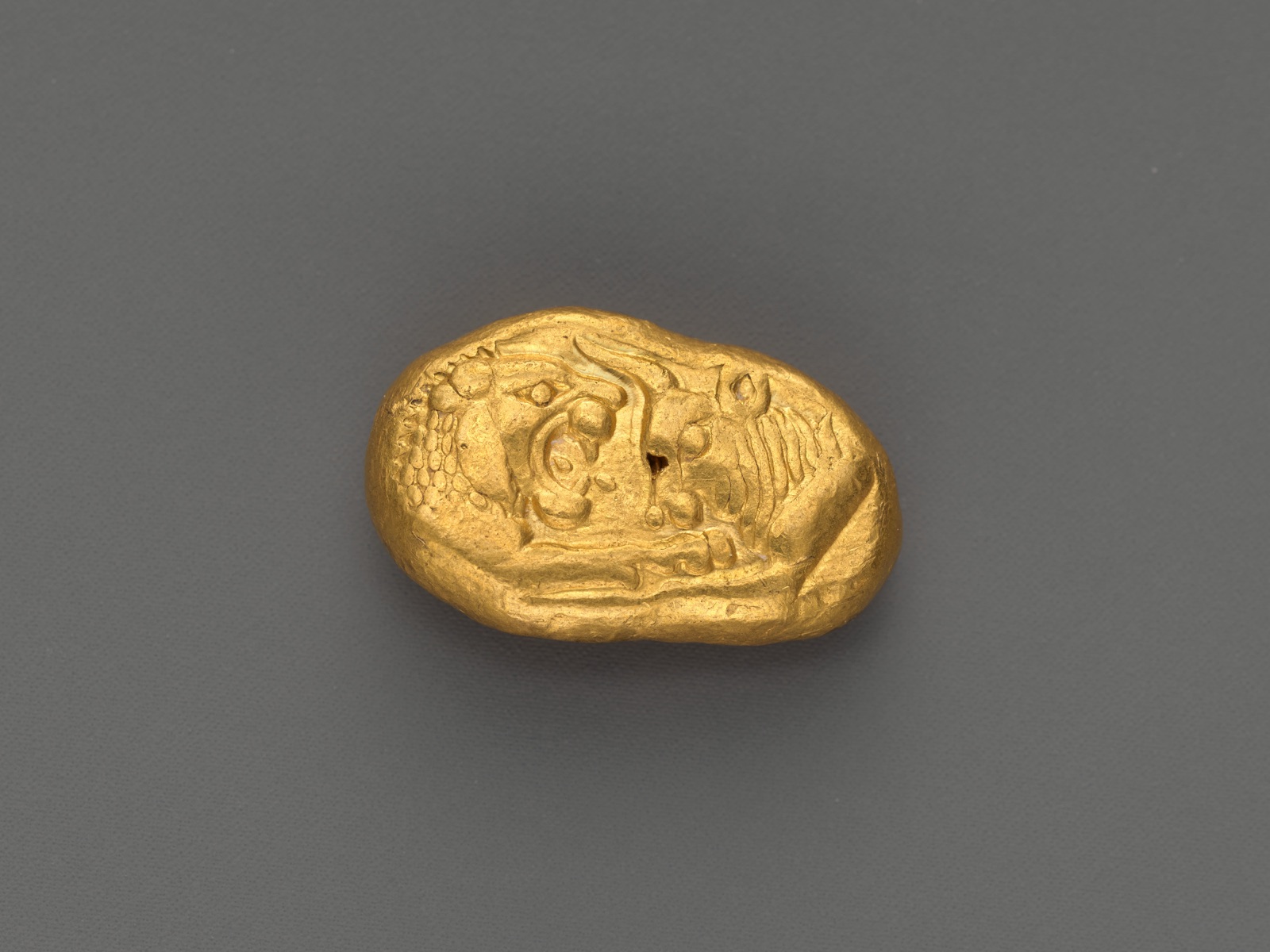
The solution appeared in the sixth century BC at Sardis, capital of the kingdom of Lydia, on the banks of the Pactolus. The torrent carried down flakes of electrum torn from Mount Tmolus, a gold naturally laden with silver. The workshops of Alyattes, then of Croesus, perfected the gesture that had been missing: salt cementation. The metal is hammered into thin sheets, stacked in earthenware pots between beds of salt, then held for days on end at high temperature, below melting point. The chlorine in the salt attacks the silver and carries it off as chloride into the walls of the pot; the gold, unassailable, remains.
This is not one more legend woven around Croesus: the archaeological excavations at Sardis have uncovered the goldsmiths' quarter, its furnaces, its cupels, down to the very droplets of gold lost in the soil. It is, to this day, the oldest gold refinery identified by archaeology. Its consequence reaches beyond metallurgy: with gold at last separated from its silver, Lydia struck the Croeseids, the first coins of a bimetallic system of gold and silver. Purity ceased to be a workshop secret and became a guarantee of power, and the expression ‘as rich as Croesus’ still speaks, unknowingly, of the prestige of the first refined gold.
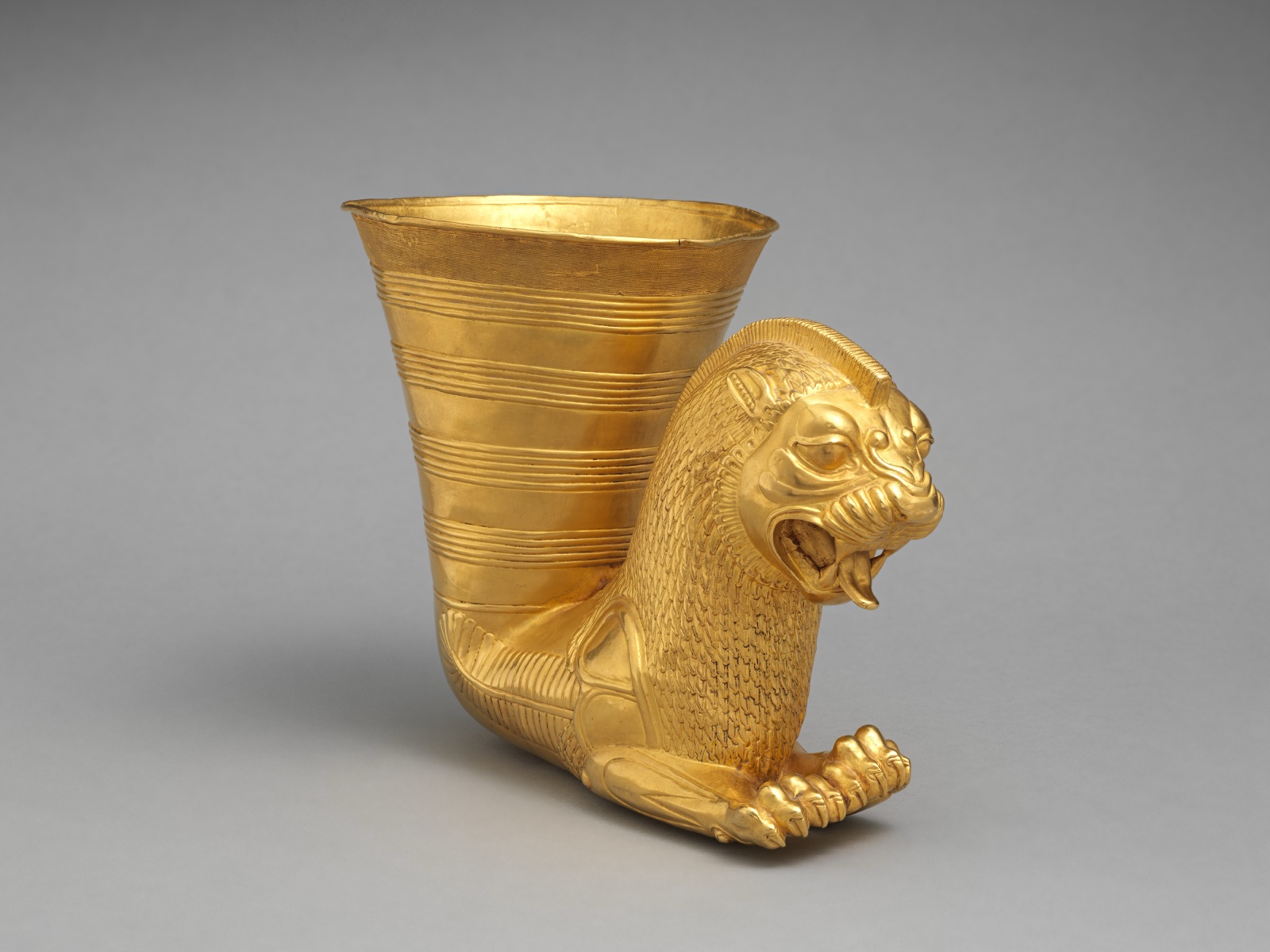
The Metropolitan Museum in New York holds a Persian vessel with a winged lion's head, fashioned in the following century in the empire that had seized Sardis. Its mass: one kilogram of gold, precisely that of the reference bar in today's vault rooms. Twenty-five centuries have passed; the scales have not changed their mind.
The alchemists' legacy: dissolving the king of metals
For centuries the alchemists pursued the transmutation of lead into gold, and missed it. But in searching, they found something else. At the end of the thirteenth century, the corpus attributed to Geber describes a mixture of nitric acid and hydrochloric acid capable of dissolving gold, the only liquid in the world able to do so. It was christened aqua regia, the royal water, since it alone makes the king of metals yield.
The founding paradox of modern refining lies there: to purify gold, one must first accept losing sight of it. Dissolve it entirely, set aside what accompanied it, then make it reappear, alone, by precipitation. The European mints would draw centuries of practice from it, inquartation with nitric acid first, then parting with aqua regia. Alchemy missed its goal and achieved something else: the chemistry of gold.
1867, 1874: seven years that invented modern gold
Two dates, two men, two opposing ideas: most of the gold the world refines today descends from one or the other. In 1867, Francis Bowyer Miller, assayer at the Sydney Mint, patented refining with chlorine gas. Injected into the molten metal, the chlorine combines with the base metals and then with the silver, which rise as chlorides to the surface of the bath; gold, which forms no stable chloride at these temperatures, stays at the bottom of the crucible. Within a few hours, the bath assays at around 99.5%. Twenty-five centuries after the pots of Sardis, salt was back in service in its pure state: cementation took days, Miller's chlorine concludes in hours.
In 1874, in Hamburg, Emil Wohlwill took the opposite path: no longer driving the impurities out of the gold, but drawing out the gold itself. Cast as an anode and immersed in a bath of chloroauric acid, the metal dissolves under the current and is redeposited on the cathode, atom by atom, leaving its impurities behind in solution. At the end of the cycle: 99.999%, the five nines, the top of the scale. The process is demanding, the anode must already assay at 95% or more, but no one has done better in a hundred and fifty years.
Between the two, the alchemists' aqua regia has become the reference route for high-value recycling: a study published in 2020 in the International Journal of Life Cycle Assessment, conducted with leading German refineries, describes it as the most widely used process in the sector, capable of reaching 99.99%. Three processes, one division of labour: chlorine roughs out, acid recycles, electrolysis completes.
The abandoned paths: mercury, the ocean, cyanide
The history of refining is also the history of the paths no longer followed. The oldest is mercury: its amalgam with gold, known since Antiquity, gilded domes and recovered fine dusts for two thousand years. Its toxicity saw it banished from professional laboratories, and the Minamata Convention, signed in 2013, works to push it back where it survives, in artisanal gold panning.
The most novelistic is the ocean. In the aftermath of the First World War, Fritz Haber, Nobel laureate in chemistry, searched seawater for the means to pay the reparations imposed on Germany: the literature of the day promised up to 65 milligrams of gold per tonne of water. Six years of discreet campaigns, analyses and oceanographic crossings delivered their verdict: a few millionths of a gram per tonne, thousands of times less than hoped. Haber gave up in 1926. The oceans do indeed contain millions of tonnes of gold; they keep them, diluted to the point of costing more to gather than they will ever be worth. The sea promised; it delivered nothing. Physical gold does not promise. It exists.
The most industrial, finally: cyanidation, patented in Glasgow in 1887, which made it possible to extract gold from the poorest ores and carried world production through the twentieth century. It belongs to mining, not to refining, and its environmental record eventually caught up with it: after the Baia Mare accident in Romania, which in 2000 spread cyanide as far as the Danube, Hungary banned the technology in 2009 and the European Parliament called in 2010 for a general ban across the Union. The industry itself is exploring the way out: in 2014, a first commercial thiosulphate plant, cyanide-free, entered service in Nevada. A process is never settled for good: it remains the best only until something cleaner comes along.
Transmutation succeeded in the end, and it changes nothing
There remained the old dream, the real one: making gold. It came true in the laboratory, and its balance sheet is the metal's finest lesson in economics. In May 2025, the ALICE collaboration at CERN published in Physical Review C the measurement of a very real transmutation: when two lead nuclei graze past each other without touching in the Large Hadron Collider, their electromagnetic fields can tear three protons from one of them. Lead, 82 protons, becomes gold, 79 protons. The alchemists were aiming true, give or take three protons.
The quantities, though, put everyone back in their place. Over the whole 2015 to 2018 campaign, the collider's four large experiments produced some 86 billion gold nuclei: 29 picograms, twenty-nine thousandths of a billionth of a gram, instantly pulverised against the walls of the vacuum tube. At the measured rate, gathering a single gram of gold would take around ten times the age of the universe. Gold's problem, then, is not how to make it. It is how to honour the gold that exists.
The mine of the future is above ground
For the gold already extracted does not disappear. The World Gold Council estimates at around 220,700 tonnes all the gold brought out of the ground since the beginning, two thirds of it since 1950: a cube barely 22.5 metres along its edge, in which most of the gold of Varna, Sardis and Babylon still exists, remelted from century to century. Rustless and indestructible, gold is the only metal of which humanity has lost almost nothing.
The conclusion imposes itself: the largest gold mine in the world is no longer a hole, it is the stock above ground. The processes are following suit. Since 2023, the Royal Mint has been recovering the gold from circuit boards in Wales through a room-temperature chemistry that targets it within seconds, with a capacity of up to 90 tonnes of boards per week. And the 2020 study cited above has put a figure on the gap: refining one kilogram of recycled gold emits around 53 kilograms of CO2 equivalent, against some 16 tonnes for mined gold, a ratio of one to three hundred. Thirty-five centuries after the furnace of Babylon, the question is no longer whether pure gold can be made anew from old metal: it has become the most exact and the most sober way of producing it.
It is within this history that the daily work of Gold & Silver Company (GSC) modestly takes its place, an integrated Foundry and Refinery at Dottignies (Mouscron), which assays, melts, refines and strikes the metal under one roof, under the accreditation of the Royal Mint of Belgium and the supervision of our assayer. In our experience on the ground at Gold & Silver Company, one question comes up again and again at the weighing: can old jewellery truly become pure gold once more? Three and a half millennia of history answer in the affirmative. Our stock is you. Our certification is us. And the result stands on the specification sheet of the 10 gram gold bar, from the eagle's head hallmark to the numbered seal, assayed at Au 999.9, well above the threshold of 995 thousandths that VAT Directive 2006/112/EC sets for investment gold.
| 6th c. BC | Salt cementation at Sardis: gold at last parts from silver; the first coins of refined gold under Croesus. |
|---|---|
| c. 1300 | The corpus attributed to Geber describes aqua regia, the only liquid capable of dissolving gold. |
| 1867 | The Miller process in Sydney: chlorine gas brings the bath to around 99.5% within hours. |
| 1874 | Wohlwill electrolysis in Hamburg: 99.999%, the top of the scale. |
| 1887 | Cyanidation patented in Glasgow: the extraction of poor ores changes scale. |
| 1920 to 1926 | Fritz Haber seeks the dissolved gold of the oceans; the real concentrations bury the project. |
| 2014 | First commercial thiosulphate plant, cyanide-free, in Nevada. |
| 2023 | Gold from electronic waste recovered at room temperature in Wales. |
| 2025 | CERN measures the transmutation of lead into gold: 29 picograms, destroyed at once. |
Three questions on the purity of gold
Does pure gold exist in nature?
No. Native gold is always alloyed, with silver first of all, often with copper; the electrum of the rivers of Anatolia is the most famous example. A fineness of 999.9 thousandths is always the product of refining, never a starting state.
Why are bars assayed at 999.9 thousandths and not 1,000?
Because absolute purity cannot be proven: measurable traces always remain. Electrolysis reaches 99.999% for laboratory uses, the standard for investment gold is 999.9, and European law sets the legal threshold at 995 thousandths. The fineness stops where measurement can guarantee.
Can gold be made?
Yes, and it serves no purpose: CERN produced 29 picograms of it over four years of campaigns, destroyed as soon as created, and it would take around ten times the age of the universe to gather a single gram. The gold that matters is already on Earth: it is mined, it is recycled, it is refined.