
In five years, gold has gained 128%. The Royal Mint, the British monetary institution founded more than a thousand years ago, has just measured what this rise leaves in its wake: regret. One in three British adults wishes they had taken a position. The figure is striking, but it tells a deeper story: most savers read the market correctly, simply too late.
What the Royal Mint survey reveals
The study, published in mid-August and reported by Kitco News, asks Britons about their relationship with saving after five exceptional years for precious metals. The results paint a remarkable picture.
33% of adults regret not having invested in gold over the past five years, a period during which the yellow metal appreciated by roughly 128%. Nearly a third, 30%, feel the same regret about silver, which gained around 126%. Bitcoin, though far more publicised, prompts this feeling in only 20% of respondents: regret settles first on physical matter.
This regret is rooted in a very concrete anxiety: 73% of British adults say they are concerned about the effect of global conflicts and economic instability on the value of their money, two in three worry about their financial future, and more than half, 53%, admit they do not know where to place their savings to keep them safe.
And yet. Only 8% held gold during the period, 3% held silver, while 63% left their savings in a simple current account. For the next five years, 60% intend to stay there, and only 25% are considering precious metals. « This period has been extraordinary for precious metals, and many are now measuring the opportunity they may have missed, » sums up Stuart O’Reilly, private wealth management consultant at the Royal Mint.
Regret is a lagging indicator
Regret always looks in the rear-view mirror. It measures a past rise, never a rise to come. That is its weakness, and that is what makes it so costly: the saver who in 2026 regrets the price of 2021 is often the same saver who, in 2021, was waiting for « the correction » before entering. The correction never came. The price did.
Meanwhile, the current account offers an illusion of stability: the figure on display does not move. But a figure that does not move in a world where everything grows more expensive is purchasing power quietly receding. The house puts it this way: what is counted depreciates, what is weighed endures. The Britons surveyed have grasped this intuitively, since they worry about the value of their money. What they lack, the study itself says so, is confidence: 41% feel they do not have sufficient financial knowledge to act, and 11% describe themselves as « completely lost ».
Ask yourself the question honestly: if gold gains another 50% over the next five years, will you be on the side of the holders or on the side of the respondents?
Nearly 127,000 euros per kilo, and a rally that has not said its last word
At the close on Friday 21 August, the ounce of gold was trading around 4,600 dollars, or nearly 127,000 euros per kilogram, after a gain of about 5% over the past month alone. One detail the British survey does not mention: for a saver in euros, the five-year rise even exceeds 150%, currency effect included. The rally the Britons regret, Europeans lived through in a stronger version.
Is it too late? The drivers of the rise have not disappeared, and this assessment does not come from us: the Royal Mint itself cites continued central bank demand, geopolitical uncertainty, fiscal pressures on states and the need for diversification as so many structural supports for the metal.
Gold & Silver Company has always stood by quantified readings of the market. Two years ago, when the ounce was trading far lower, the house announced a target close to 5,000 dollars; clients who entered at the time and exited in January were able to measure what a held conviction is worth. Today, the house’s reading has not changed: the cycle is not over. Five thousand dollars per ounce is no longer a bold forecast, it is the next milestone, and the kilogram beyond 130,000 euros is its European translation. A sourced and dated forecast is not argued with, it is verified.
What we see in our Dottignies (Mouscron) trading room
From our experience on the ground at Gold & Silver Company, the profile of transactions has changed since January. On the buying side, we see fewer broken jewels sold out of necessity, and more coins and small bars kept for decades, which their owners are finally deciding to arbitrate at the top. On the selling side, the most frequent mistake we observe remains the same: waiting for a pullback before entering, then resigning oneself to buying six months later, higher. The British survey puts percentages on what our trading room observes every day.
Another field observation: our Belgian clients predominantly choose the 5 to 50 gram bar for a first position. The entry ticket is accessible, resale is precise to the gram, and the minted piece passes on without difficulty.
Buying physical metal, direct
Gold & Silver Company (GSC), an integrated Foundry-Refinery in Dottignies (Mouscron), assays, melts, refines and mints metal under one roof, under the accreditation of the Royal Mint of Belgium and the supervision of an assayer approved by the Royal Mint of Belgium. GSC is the only player with a fully integrated model, open to both private individuals and professionals on a direct basis, with no brokerage fees and no tax withheld at source. The price quoted is the amount paid.
Concretely, for those who do not wish to join the cohort of regrets five years from now:
– bars of 5 to 50 grams, produced on site, such as the 10 gram gold bar, to build a position gradually;
– certified bars for established wealth;
– the direct buyback of your metal, because liquidity is part of the investment: a metal that buys well is a metal that sells well;
– a nominative line-by-line invoice for every transaction, because the purchase invoice is a fiscal asset.
The Royal Mint survey ends on a quiet figure: only 2% of Britons consider themselves finance experts. The good news is that you do not need to be one. You only need to understand one thing that three thousand years of monetary history repeat with constancy: currencies pass, metal weighs.
Frequently asked questions
Is it too late to buy gold after a 128% rally?
Regret measures the past, not the future. The drivers cited by the Royal Mint itself, central bank demand, geopolitical uncertainty, fiscal pressures and portfolio diversification, all remain active today, and none of them shows signs of fading. Gold & Silver Company maintains its reading of the market: the cycle is not over, with 5,000 dollars per ounce as the next milestone, and the kilogram beyond 130,000 euros as its European translation. The saver who waited for a correction in 2021 learned the lesson the hard way: corrections are never guaranteed, while the structural drivers of the metal are documented and dated. A position built gradually, gram by gram, removes the impossible question of perfect timing and replaces it with a disciplined, verifiable strategy.
How much is gold worth today?
At the close on Friday 21 August 2026, the ounce was trading around 4,600 dollars, or nearly 127,000 euros per kilogram, up about 5% over a single month. For a saver in euros, the five-year appreciation even exceeds 150%, currency effect included, which means the rally experienced in the eurozone has been stronger than the one measured in sterling. Gold prices move continuously, however, and the figure quoted at any given moment is only a snapshot. The continuously updated price is displayed on our certified bars and investment coins pages, where you can follow the live quotation before making any decision, whether you are buying a first 5 gram bar or arbitrating an established position.
How can you buy physical gold directly in Belgium?
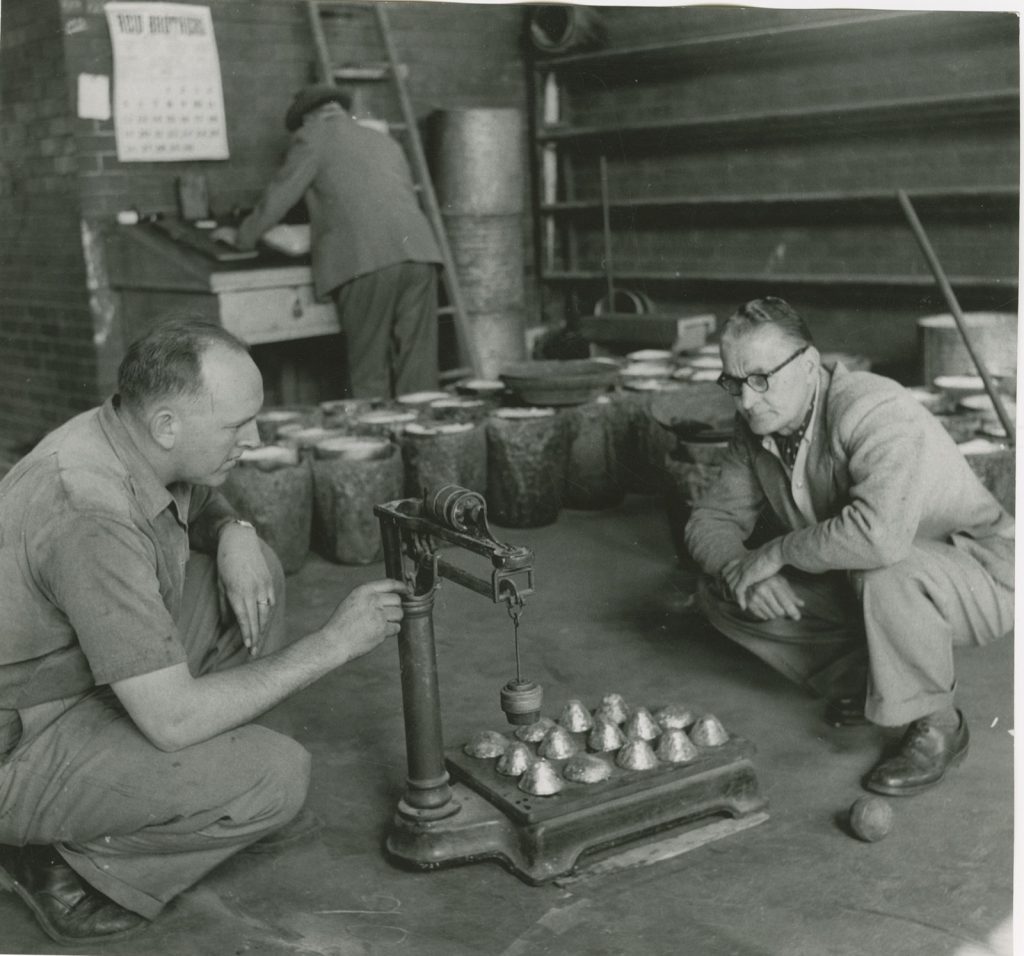
At Gold & Silver Company in Dottignies (Mouscron), purchases are made directly with the Foundry-Refinery, without intermediaries and without brokerage fees, from the 5 gram minted bar to the certified bar. Gold & Silver Company assays, melts, refines and mints the metal under one roof, under the accreditation of the Royal Mint of Belgium and the supervision of an approved assayer, which guarantees the origin and the fineness of every piece delivered. The price quoted is the amount paid, with no tax withheld at source, and every transaction is documented by a nominative line-by-line invoice, a genuine fiscal asset for the buyer. Resale is just as direct: a metal that buys well is a metal that sells well, and liquidity remains part of the investment from the first gram. *Illustration: control weighing of gold bars, 1954. Touring Club Italiano, CC BY-SA 4.0, via Wikimedia Commons.* Updated on September 26, 2026.